Information Security
NCCU continues to strengthen information security and personal data protection in accordance with the Information Security Management Act. The University has established an information security policy, related regulations, and a dedicated committee to oversee implementation. All policies are publicly available on the Computer Center website for faculty, staff, and contractors.
To safeguard information assets, NCCU conducts annual information security and data protection audits across selected units through document reviews and on-site inspections, with improvement recommendations provided. Clear procedures for incident reporting and response are also in place to ensure timely handling. In 2024, 52 information security incidents were reported—a significant decrease from 238 cases in 2023—and no personal data breaches occurred. All incidents were properly recorded, reported, and addressed in accordance with regulations.
Security-related Enhancements
- Completed five information security awareness raising seminars for all campus staff, with a total of 643 participants; along with five information security professional courses, with 136 participants.
- Implemented a campus-wide inventory and risk analysis of information assets, including information systems and IoT devices.
- Continuously upgraded the main operating system and components of the campus administration system.
- To prevent unauthorized logins, on December 19, 2024 the 22nd meeting of the Information Security and Personal Data Protection Implementation Committee approved a proposal to remove the account and password memory function of the “iNCCU Personalized University Campus Portal.”

Digital Transformation
Digital Transformation of Administrative Processes
In 2022, NCCU established the Administrative Process Digital Transformation Team (DTT) to review administrative processes, build a cross-departmental coordination platform, and apply digital technologies to enhance efficiency. Through continued digital transformation, the University has improved service quality and user experience, demonstrating its commitment to streamlined administration and high-quality services.
Digitalization Highlights
- Outdoor Facility Repair System:Proposed by the Student Union and developed by the Computer Center, the system features GPS location and photo uploads. In 2024, it handled over 90 repair requests, significantly improving reporting convenience and maintenance efficiency.
- Alumni System Optimization:Nearly 200,000 alumni records were reorganized to improve data accuracy, with enhanced functions for login, ID card applications, and notifications. In 2024, the system recorded around 24,000 user visits, strengthening alumni services and engagement.
Outdoor Facility Repair Request System Access Log in via:
- Mobile NCCU App: Navigate to nami → Quick Access System Links → Outdoor Facility Repair Request System
- iNCCU: Search for “Outdoor Facility Repair Request System”

Digital Instruction and Learning
- Pre-College Micro-Courses:Since 2021, NCCU has partnered with the Taipei City Government and six municipal education bureaus to offer weekend micro-courses, providing high school students with diverse opportunities for self-directed learning.
- Digital Learning Platforms:The NCCU Center for Teaching and Learning Development operates NCCU Digital Knowledge City, a one-stop platform integrating MOOCs, open courses, master lectures, and digital teaching workshops. As of April 2025, the platform hosts 474 high-quality digital learning resources. Additional platforms such as Moodle, WM5, and video conferencing systems support online teaching and digital content development.
- Faculty Digital Empowerment:In 2024, NCCU offered 12 digital teaching workshops with 630 participants. Courses are structured into four stages based on faculty digital learning pathways, strengthening teaching design and platform use. Generative AI was a key focus, supporting instructors in adopting emerging educational technologies.
🔗NCCU Digital Knowledge City:https://ctld.video.nccu.edu.tw/?

AI Multidisciplinary Empowerment
In response to the impact and transformation brought by generative AI, NCCU advances the vision of “Human-centered AI for a Sustainable Future.” Since 2023, the University has established the Center for Cross-disciplinary Artificial Intelligence Research to integrate campus-wide AI teaching and research capacity, promote interdisciplinary collaboration, and build an AI ecosystem grounded in humanistic values.
🔗NCCU Artificial Intelligence Interdisciplinary Research Center :https://iaic.nccu.edu.tw
AI Multidisciplinary Courses
With a focus on teaching empowerment and application, the Center offers an AI Multidisciplinary Micro-Program to promote AI literacy and cross-disciplinary application, equipping students with solid foundational knowledge and practical transformation skills.
- AI Multidisciplinary Micro-ProgramThe program consists of three 3-credit courses (foundational, advanced, and applied). During the 2023–2024 academic years, 34 classes were offered with 1,396 enrollments, of which 69% were students from non-IT fields.
- AI Multidisciplinary Professional CoursesIn collaboration with academic departments, the Center offers interdisciplinary AI courses (e.g., generative digital art and speech processing). As of Spring 2024, four courses were offered with 120 enrollments.
- AI Course MapIn 2024, NCCU launched an updated AI Multidisciplinary Course Map, organizing courses into six learning modules—Information Literacy, STEM, AI Portal, AI Core, AI with X, and AI in X—to support students in planning personalized learning pathways.
AI Multidisciplinary Research
- The AI Multidisciplinary Center focuses on building cross-disciplinary research teams and developing research communities. It plays a key role in technology integration and co-creation, empowering diverse application fields through collaborative research.
- Building AI Multidisciplinary Teams:The number of teams expanded from 4 teams (26 members) in 2023 to 6 teams (93 members) in 2024, covering areas such as digital media and art, historical image analysis, materials and quantum physics, smart voice and education, smart land administration, smart healthcare, AI-driven marketing, and smart psychology.
- Industry–University Collaboration:Completed three industry–university collaboration projects in smart healthcare, AI marketing, and AI land administration, while continuing to expand partnerships with industry to promote mutual exchange between academia and practice.
- Promoting Cross-Domain AI Collaboration:Through the AI Multidisciplinary Research Concept Grant Program, the University fostered cross-domain collaboration and expanded research networks. In 2024, 59 proposals were submitted, with 28 teams selected.
AI Cross-Domain Community
- The AI Multidisciplinary Center integrates teaching and research initiatives and serves as a platform for connecting cross-disciplinary teams and communities. Through a wide range of activities, the Center brings together talents from diverse fields to foster exchange and collaboration, positioning the campus as a living lab for AI multidisciplinary practice.
- Administrative AI Collaboration:In collaboration with the Secretariat and the Office of International Cooperation, the Center developed an NCCU bilingual legal document assistant to support the translation of official documents and regulations. It also partnered with the Accounting Office to develop an AI-powered reimbursement assistant, providing guidance for faculty and staff on reimbursement procedures.
- Cultivating Foundational AI Skills:The Center worked with the College of Social Sciences Real Estate Center to design an 8-week training programaimed at strengthening foundational AI literacy.
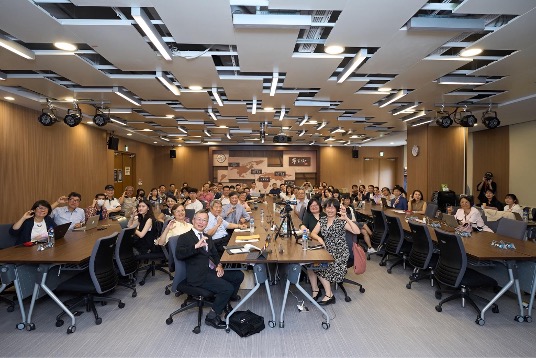
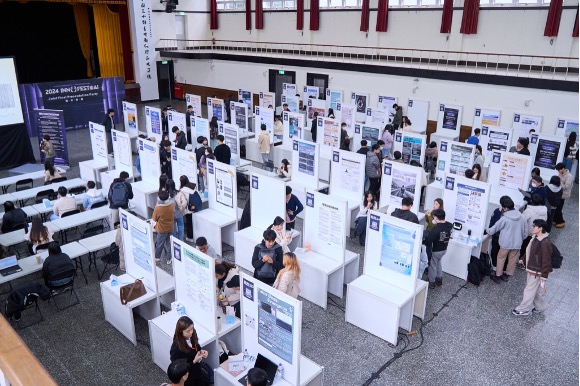
- Promoting Exchange and Engagement:A total of 24 AI multidisciplinary lectures, workshops, joint exhibitions, and forums were organized, including 15 collaborative events with campus units, engaging approximately 2,892 participants.